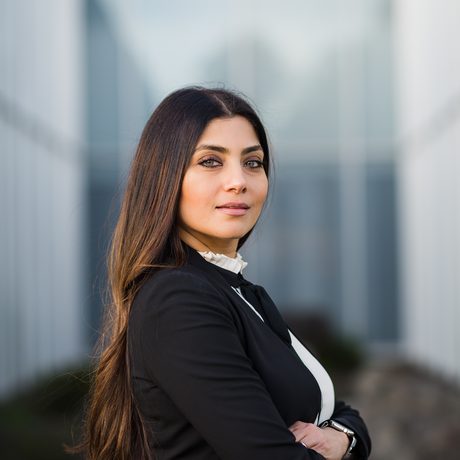
Anita Ali
President
A global Fortune 50 technology executive who has spent her career opening doors for women in STEM, and who serves on several humanitarian boards.
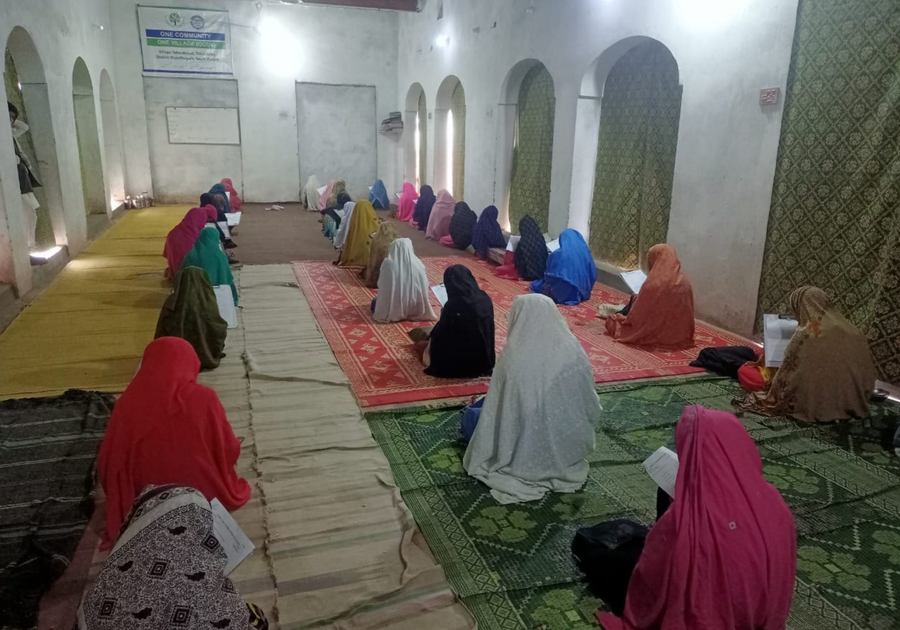
Two schools run inside the village mosque, so nothing had to be built, and a year of teaching costs about one hundred dollars per child. Our education partner TAKMIL runs both.
A solar tube well now supplies water that was tested in Islamabad and approved for drinking. It reaches the people, their animals, and their fields.
Our mission is to see Pakistan become khuddār, that is more self-reliant, where education, healthcare, clean air and clean water are accessible to all, and where there are opportunities for all to make a decent living.
We work in remote villages, one at a time. A community here adopts a village there, and holds it for five years.
The villages with no clean water are usually the villages with no school. So the same trip verifies both.
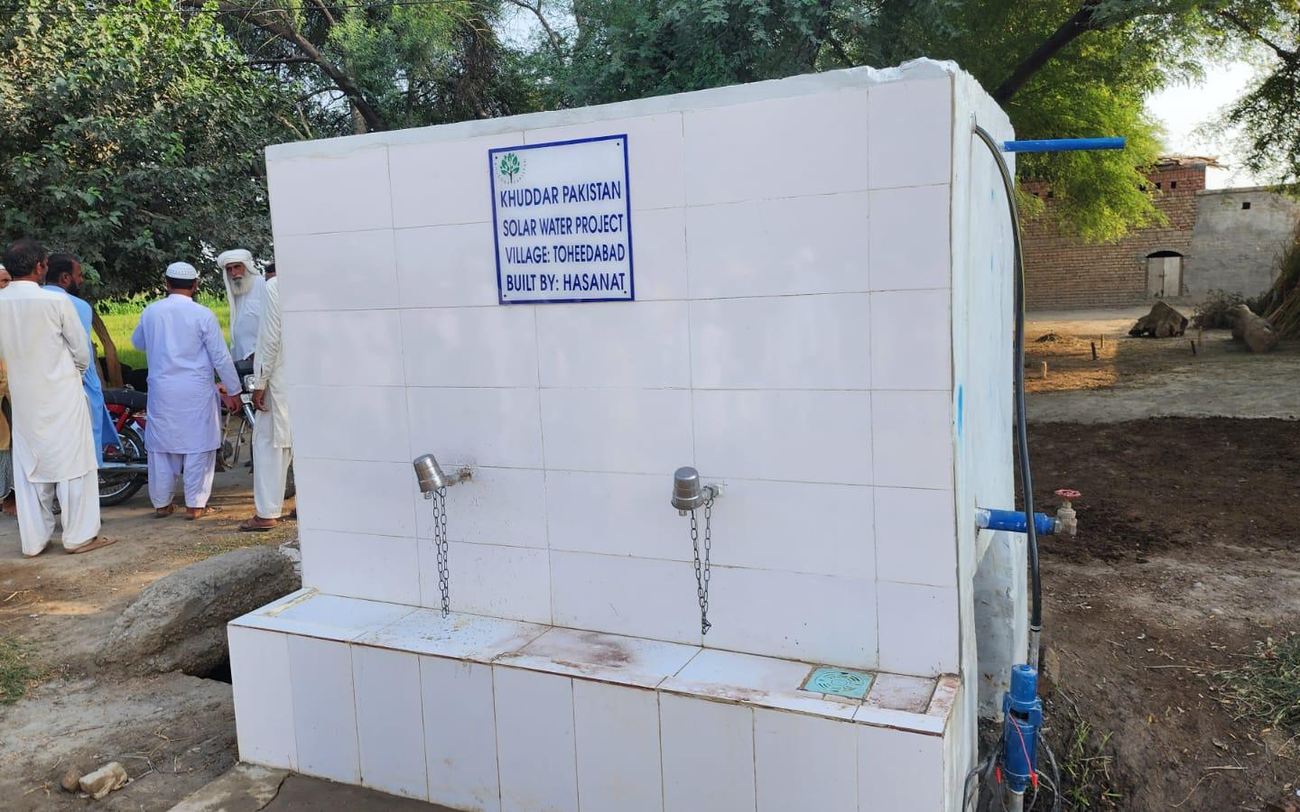
Toheedabad · solar water point
A village is held for five years and four things go into it. Education is the constant and it is most of what we do. Water is the part that swings the cost, because some villages need very little and others need everything built. Health runs on the doctors in the sponsoring community. Vocational training is the newest of the four.
This is the part that does not vary. Every adopted village gets a school, run by TAKMIL in a room the village already has, carrying a child from out of school to grade eight level in thirty months.
This is the part that varies most, and it is most of the reason one village costs more than another. Some villages already have workable infrastructure and need very little from us. Others need the whole thing built. At Toheedabad we installed a solar tube well, and the water went to Islamabad for testing before anyone drank it.
We send equipment in, blood pressure monitors and blood sugar meters among it, and readings are taken in the village and reported back. Doctors from the sponsoring community, which today means North Carolina, take the calls remotely and advise on what the readings show. Sessions have run in Urdu and Saraiki.
Where there is a way for women to earn, we fund it. So far that means sewing: the machines, the training, and somewhere for a girl who finishes her schooling to go next, with a second income for the household. It is running at Toheedabad. At Kahror Pakka it comes alongside a school that already teaches more than two hundred children. This is the newest of the four.
Eric Benjamin and his group play at The Rumman Room in Raleigh to fund the next village. Tickets are on sale now, and the whole evening goes to putting children who have never been to school into one.
Come for the music. Stay for the meaning. Help us fund the next village.
Two schools inside the village mosque, a solar tube well, three medical awareness sessions, and sewing now running.
90 children in school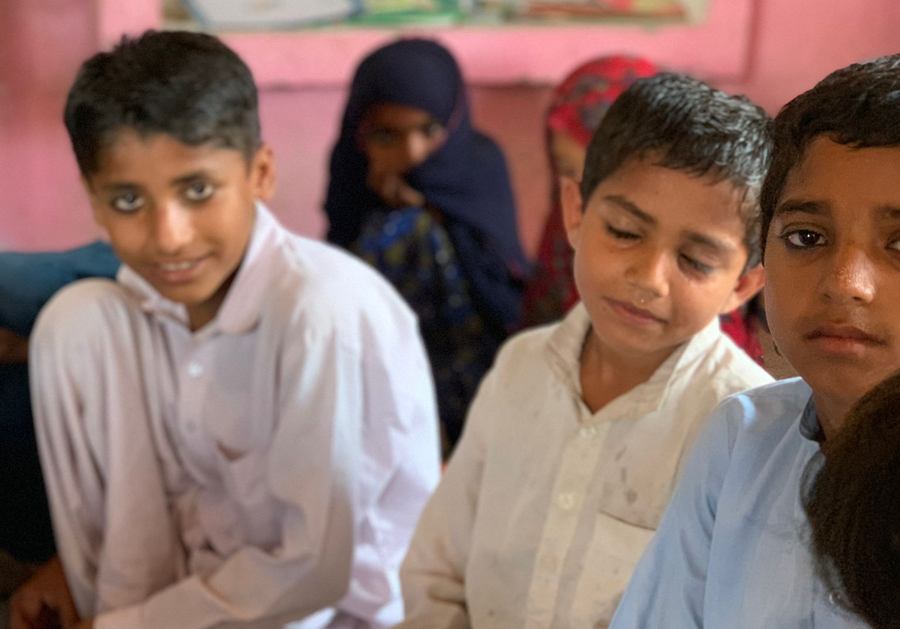
Glucose monitors and trained health volunteers are next.
60 children in school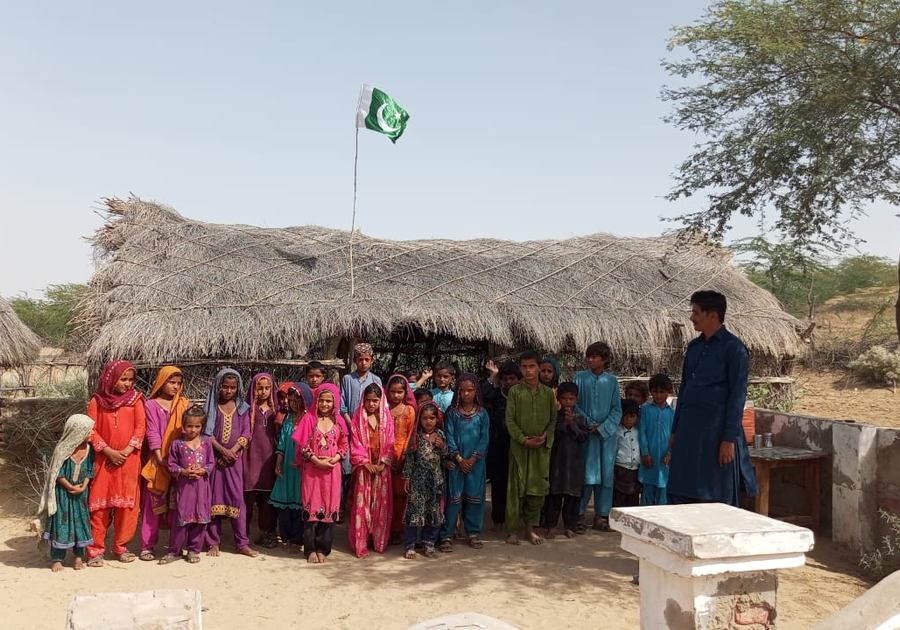
Zaman Foundation brought water filtration, then asked us for a school. TAKMIL opened it in November 2025.
52 children in schoolSobia built the school here herself. What we fund is the sewing centre that gives the women a way to earn.
Vocational training for womenWe publish a full financial statement every year. In 2024 we spent $33,917, and $30,018 of that went straight to the school at Tibbi Hoot Maher.
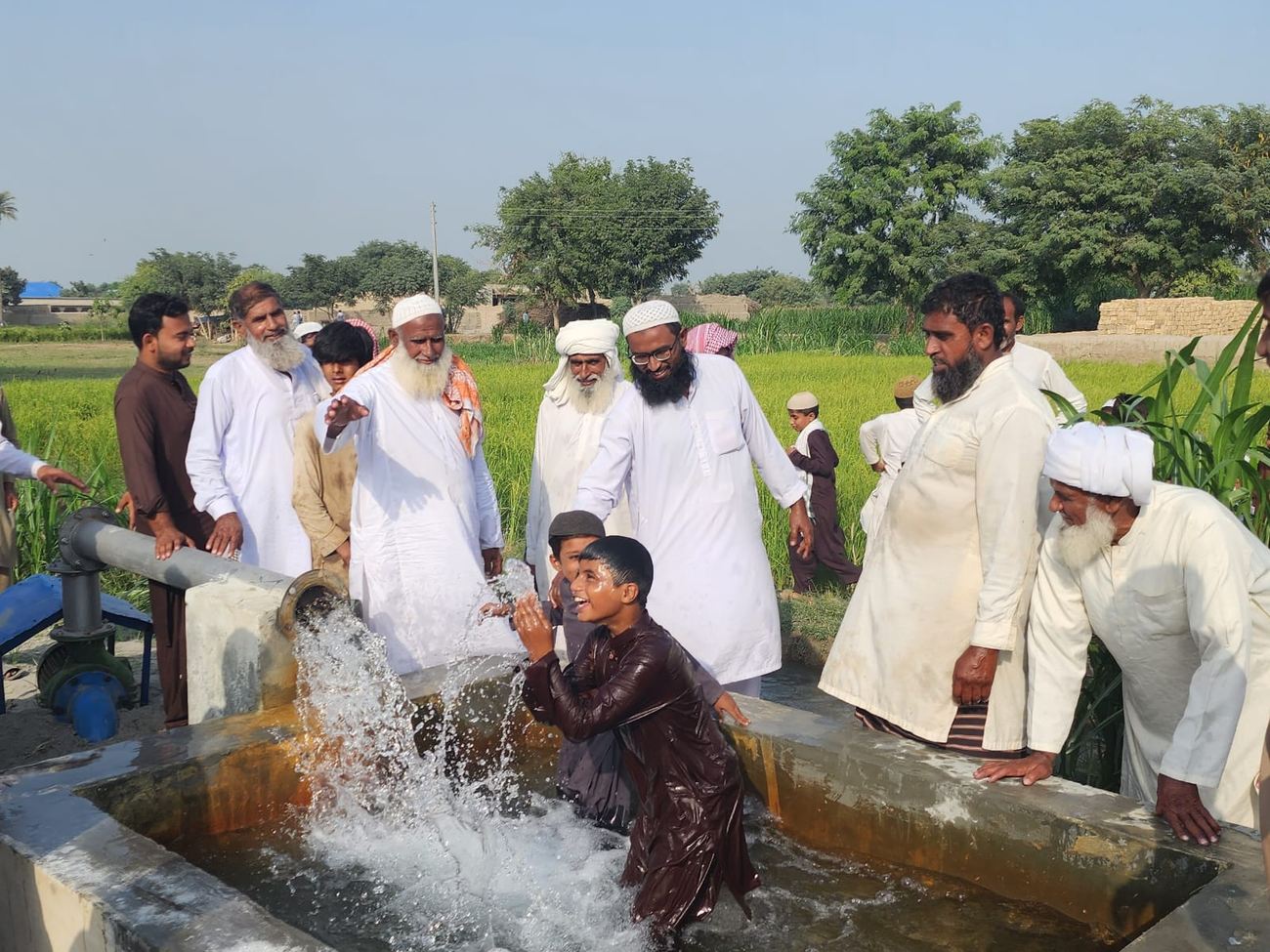
The tube well at Toheedabad
Sponsor a child, fund a village by name, or give once. If your employer matches gifts, yours can go twice as far.
Eric Benjamin and his group play at The Rumman Room in Raleigh for one evening, and the whole of it goes to the next village. Come for the music. Stay for the meaning. Help us fund the next village.
Tickets are on sale now. Every dollar reaches the village: the ticketing platform takes no fee, so what you pay is what we spend.
One evening of live music at The Rumman Room in Raleigh, with Eric Benjamin and his group. Tickets are on sale now. There is no platform fee on the ticketing, so the price on the ticket is the amount that reaches the work.
You can add a donation to a ticket, and you can give without coming at all. Neither is worth more to us than the other.
Doors at half past six
Middle school, high school and college
Any amount, with or without a ticket. It goes to the same place.
Sponsor a child, fund a village by name, or give once. If your employer matches gifts, yours can go twice as far.
Every village we adopt is held for five years. An entry closes only when the village can carry the work itself. Nothing here is a pilot.
Two schools inside the village mosque, a solar tube well, three medical awareness sessions, and sewing now running.
90 children in schoolGlucose monitors and trained health volunteers are next.
60 children in schoolZaman Foundation brought water filtration, then asked us for a school. TAKMIL opened it in November 2025.
52 children in schoolSobia built the school here herself. What we fund is the sewing centre that gives the women a way to earn.
Vocational training for womenHeld means adopted and funded, with a community responsible for the full five years.
In development means we are working with people already active there and have not yet set the commitment.
The next village is not listed yet. We are refreshing the survey work, and an entry appears here only once it has been verified on the ground. A Night of Music raises the money for it.
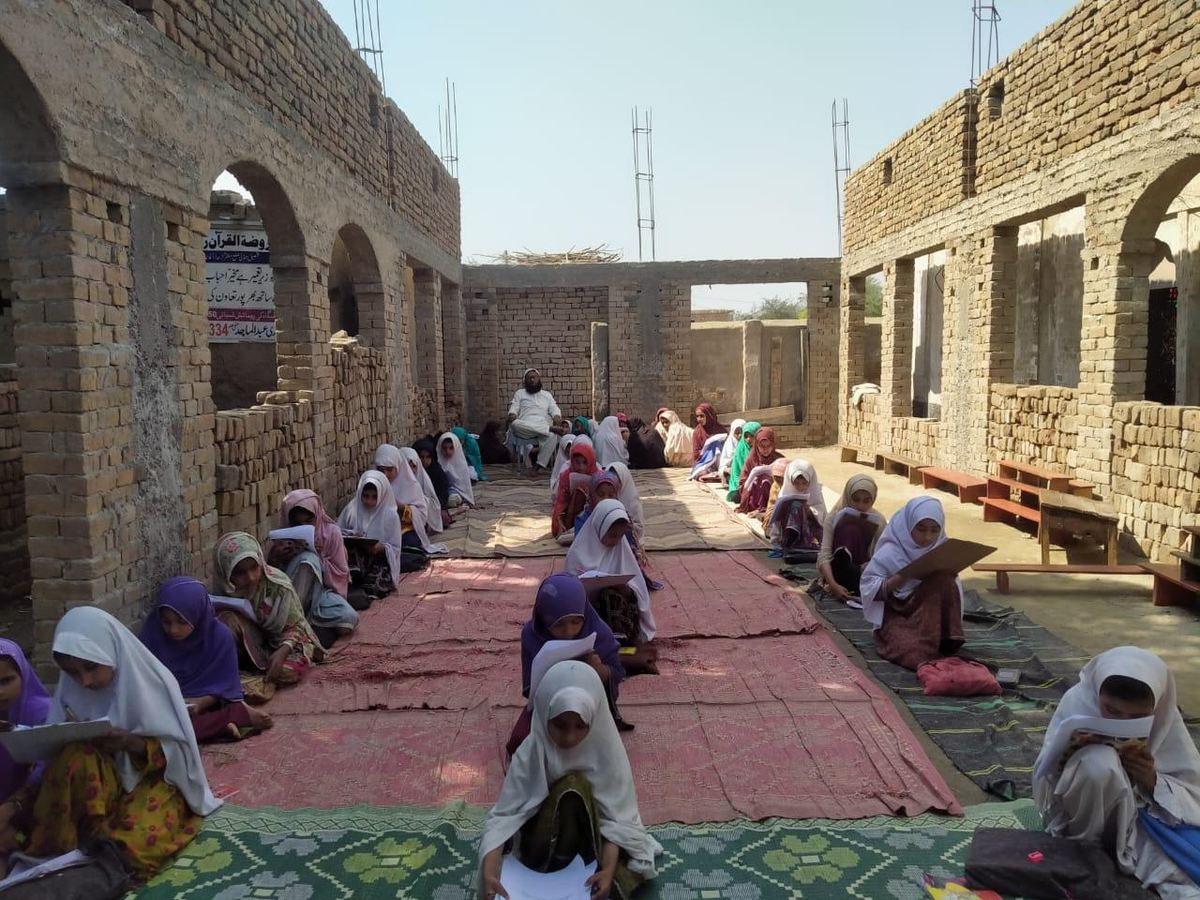
Classes held inside the village mosque
Sponsor a child, fund a village by name, or give once. If your employer matches gifts, yours can go twice as far.
The first village. Every child here was out of school when we arrived.
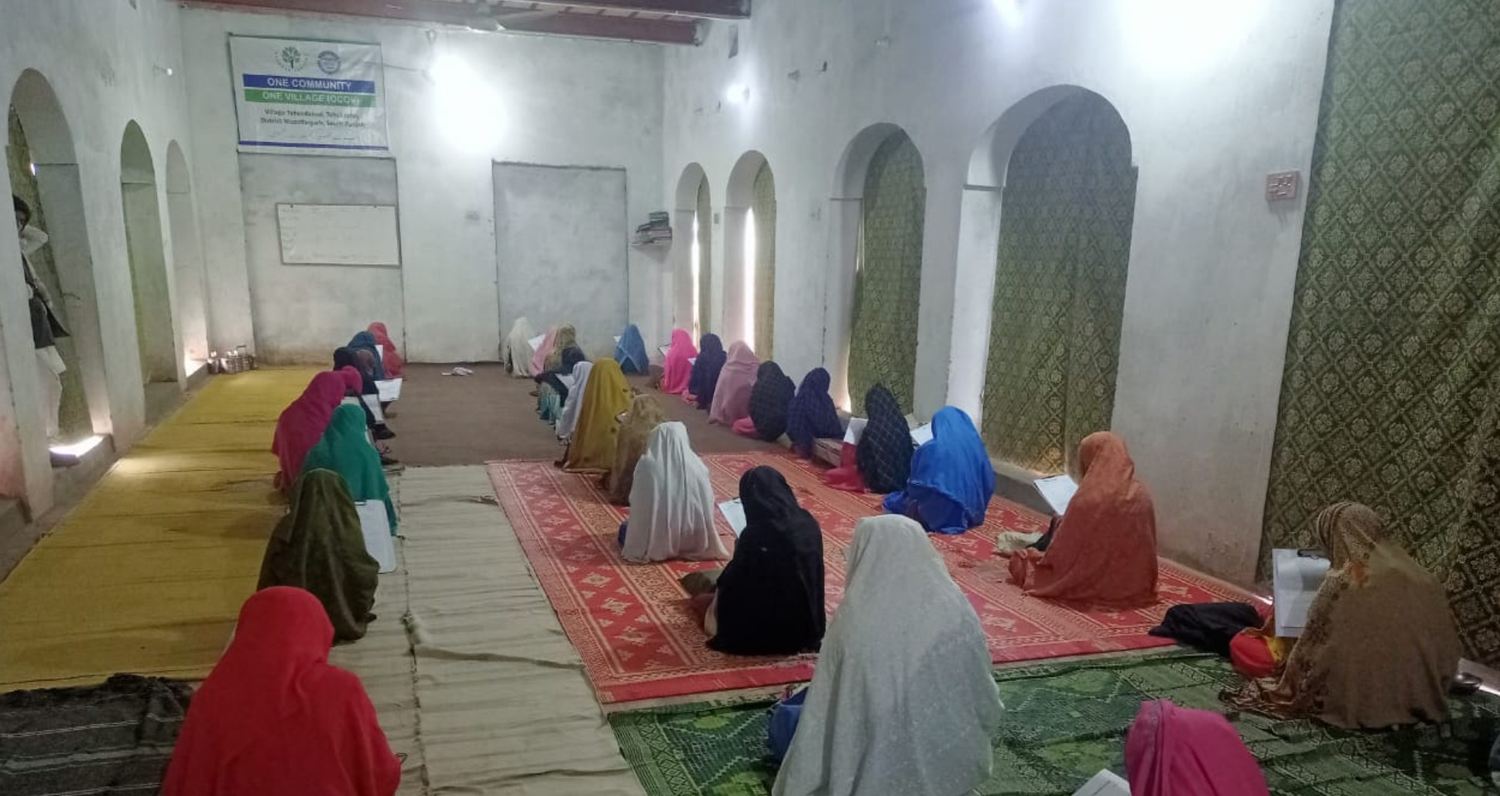
Toheedabad · Southern Punjab
Toheedabad holds about forty to fifty houses in southern Punjab. When we surveyed it, all ninety-five children in the village were out of school. The nearest hospital was in Muzaffargarh, more than an hour away if you had transport. A few homes had water pumps and nobody knew whether the water was safe.
In 2022 our North Carolina community took the village on. By the end of 2023 there was a girls school and a boys school, both running inside the local mosque. Housing the classes in the mosque meant no building had to go up, which is why a year of teaching costs about one hundred dollars per child. TAKMIL runs both schools.
A solar tube well followed. The masjid roof had to be reinforced to carry the panels. Water from the well was sent to Islamabad for testing and approved for drinking. It reaches the people, their animals, and their fields.
Dr. Sadia Ejaz, from North Carolina, held the very first medical awareness session, on diabetes detection and management, for the women of the village. About thirty attended, and the conversation went well past diabetes. She spoke in Urdu while a translator repeated everything in Saraiki. Two more sessions followed, kidney disease by Dr. Qamar Khan, and smoking by Dr. Asif Zia.
Vocational training has since started here. The sewing machines have been delivered and the work is under way, which makes Toheedabad the first village where we fund a way for women to earn as well as a way for their children to learn.
Sponsor a child, fund a village by name, or give once. If your employer matches gifts, yours can go twice as far.
Sixty children in school, and the largest single transfer we have made.
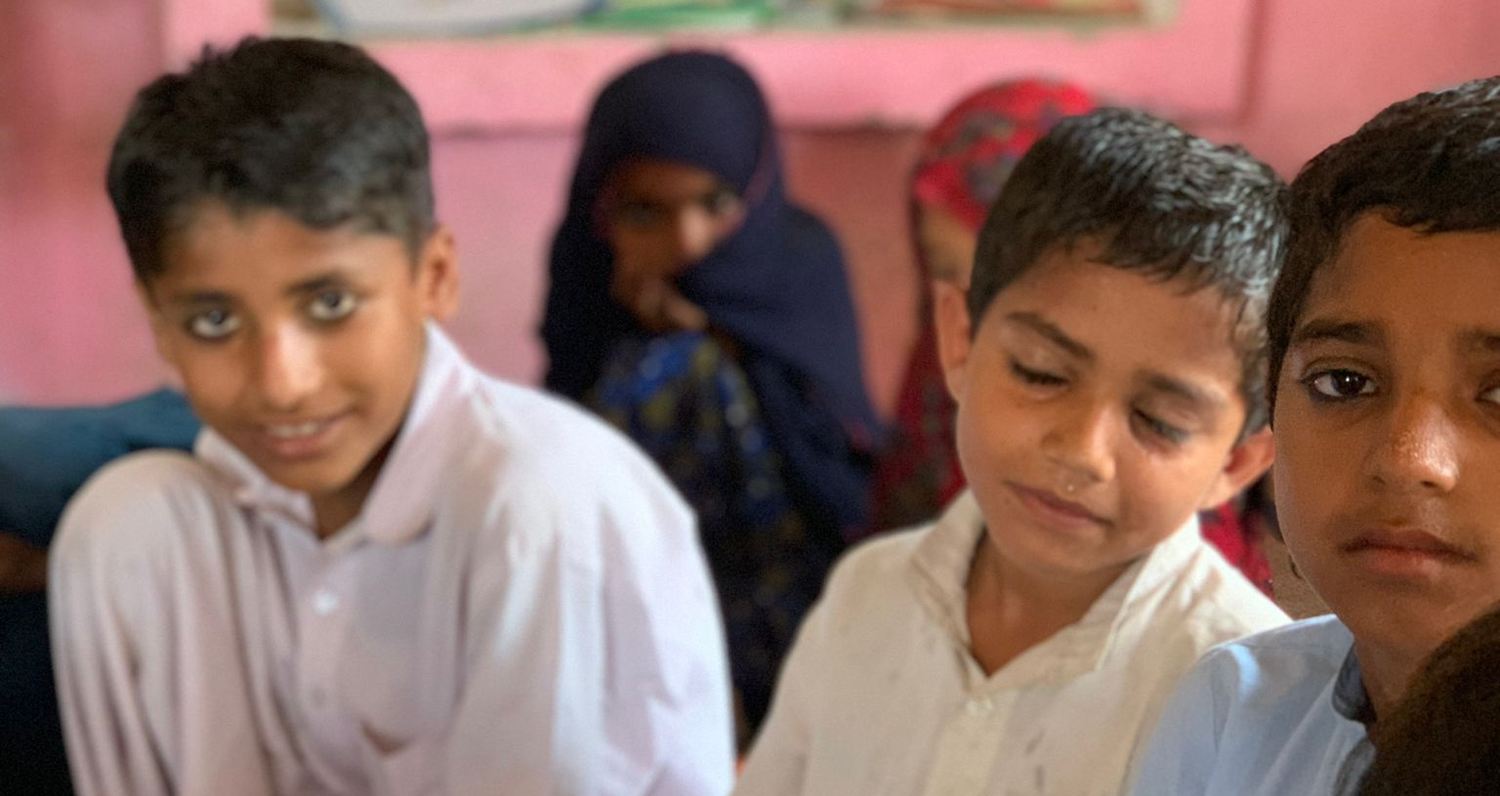
Tibbi Hoot Maher · Punjab
Our North Carolina community adopted Tibbi Hoot Maher in 2024. Sixty children are now in school there.
In December 2024 we sent $30,018 directly to the school. That single transfer was the largest thing we did that year and it is the reason our 2024 accounts look the way they do.
Next for this village: one or two glucose monitors, with a man and a woman from the community trained to take readings and report them to a physician in the United States who advises back. Blood pressure machines on the same model. School uniforms are under review.
Sponsor a child, fund a village by name, or give once. If your employer matches gifts, yours can go twice as far.
Water came first here. The school followed because the village asked for it.
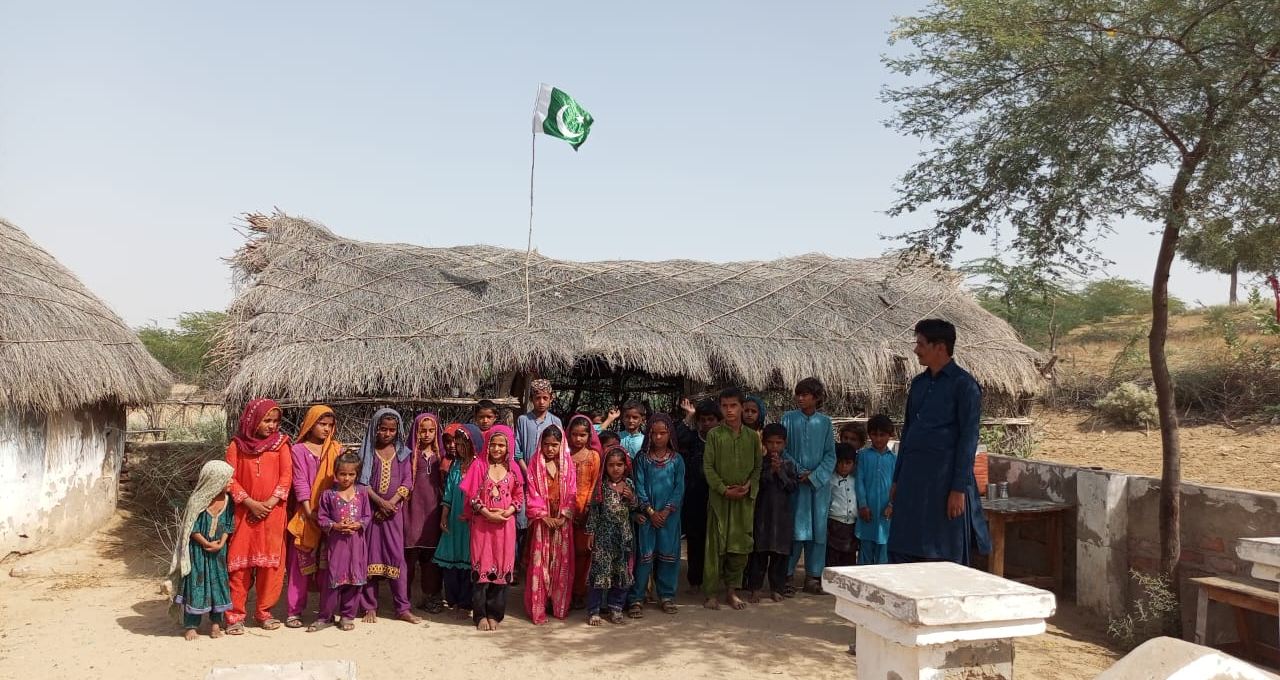
Bhujbar · Umerkot, Sindh
Zaman Foundation installed a water filtration system in Bhujbar and then came to us. The village needed a school for its out-of-school children, and they asked whether we would build one.
Zaman Foundation, TAKMIL and Khuddar Pakistan met jointly and agreed to go ahead. TAKMIL launched the school in November 2025, serving fifty-two children from the community.
The school is currently inside TAKMIL's six-month probation period. If it completes that successfully, Khuddar Pakistan sponsors it for five years and takes on whatever else the village needs to keep going.
At Eid every child in the village received two sets of clothes and a pair of shoes, including the children who are not in the school.
Zaman Foundation has put three projects to us for Bhujbar. We are planning to take on all three.
Keeping animals is how most families here earn. A bore pumped by solar would hold water through the dry months, so the herds drink and nobody spends the day walking to find it. The village is contributing the solar plates itself.
Fans and lighting, so the room is workable through the hot season. There is no grid here, so the school gets its power the same way the lessons do.
A drum that rolls along the ground instead of being carried. Around three hundred and twenty households would get one. The fetching is done mostly by women and children, and this is the part of their day it gives back.
Sponsor a child, fund a village by name, or give once. If your employer matches gifts, yours can go twice as far.
Sobia was born here in poverty. She came back with a master's degree and built a school.
Members of our North Carolina community were already working in this village when they came to us. It is the clearest example we have of what one person can do.
Sobia was born into poverty in Kahror Pakka. She left, earned a master's degree from SZABIST in Karachi, and came back with a plan to lift the place she came from and to give the women there a way to earn.
She now runs a school covering grades one through ten, educating more than two hundred children, and operates a sewing vocational centre for women alongside it.
We are not funding the school. Sobia built that and it runs. What we fund here is the sewing centre, so the women of the village have a way to earn alongside the teaching their children already get. It is a step we have wanted to take, and we are taking it with someone who built the thing herself.
Sponsor a child, fund a village by name, or give once. If your employer matches gifts, yours can go twice as far.
There are hundreds of Pakistani expatriate communities around the world and thousands of villages that need what those communities can give. OCOV pairs them one to one and holds the pairing for five years.
Mostly this is education, and that part is the same everywhere. Water and health change shape from one village to the next, and water is most of the reason two villages do not cost the same.
This is the part that does not vary. Every adopted village gets a school, run by TAKMIL in a room the village already has, carrying a child from out of school to grade eight level in thirty months.
This is the part that varies most, and it is most of the reason one village costs more than another. Some villages already have workable infrastructure and need very little from us. Others need the whole thing built. At Toheedabad we installed a solar tube well, and the water went to Islamabad for testing before anyone drank it.
We send equipment in, blood pressure monitors and blood sugar meters among it, and readings are taken in the village and reported back. Doctors from the sponsoring community, which today means North Carolina, take the calls remotely and advise on what the readings show. Sessions have run in Urdu and Saraiki.
Where there is a way for women to earn, we fund it. So far that means sewing: the machines, the training, and somewhere for a girl who finishes her schooling to go next, with a second income for the household. It is running at Toheedabad. At Kahror Pakka it comes alongside a school that already teaches more than two hundred children. This is the newest of the four.
The programme on this page is TAKMIL's. They designed the accelerated model, train the facilitators and run every school Khuddar Pakistan funds. Our part is paying for the school and verifying the village before it opens. Their own account of the model is at takmil.org.
Grades six to eight take a further eighteen, so a child who never went to school can reach grade eight level in thirty months. The curriculum is the national one, moving forward on assessment rather than repeating school years beside classmates half their age.
The sun charges a panel, the panel runs a terminal, and the terminal drives a mini projector. The room is whatever the village already has. The same terminal sends attendance and progress back out, so a class is monitored rather than assumed.
Grades one through five run in twelve months. Grades six through eight take a further eighteen, so a child who never went to school can reach grade eight level in thirty months. Children of different ages sit together, and a child who is years behind moves forward on assessment rather than repeating school years beside classmates half their age. The curriculum is aligned to the national one, so this is acceleration and not a substitute syllabus.
No grid power and no school building. The sun charges a panel, the panel runs a terminal, and the terminal drives a mini projector. TAKMIL calls the kit a School in a Box, and it is carried in rather than built. A topic arrives as two or three short video lessons drawn from open educational resources, and a digital assessment follows. The room is whatever the village already has: a mosque, a baithak, a jirgah space, or a facilitator's own home.
The content is aligned to the national curriculum. Children are assessed before they start and again at the end of each stage, with checks along the way. The same terminal records attendance and progress and sends it back out over mobile data, about weekly and faster where the signal is strong. Nobody has to take our word for whether a class ran.
This is not a parallel school system. A child who finishes is meant to enter a government school at the right level. Established sites have carried a first cohort all the way to grade eight, with second and third cohorts behind them. Newer sites are still reaching basic literacy. Children are carried through years of schooling rather than counted once at intake.
Numbers are checked in person rather than taken from a first survey. The step that matters most is the one where we turn children away.
The villages with no clean water are usually the villages with no school. So the same trip verifies both.
Our education partner and our water partner now work with each other directly, exchanging the written criteria for how schools are identified, how students progress, and how water sites are chosen. That work is active and still being formalised, not signed and finished.
Which children are out of school, how far the nearest hospital is, whether the water is safe to drink.
The first picture is checked in person before anything is committed. Contact numbers turn out to be disconnected. Children listed as out of school turn out to be attending a government primary after all.
Where a parent reports a child is already enrolled elsewhere, that case is evaluated individually, because the child may not meet the criteria for the programme. Turning them away is the point of checking.
Numbers are verified on the ground rather than taken from a first survey, and the commitment runs five years.
Children out of school, distance to the nearest hospital, whether the water is safe to drink. We cost the work before anyone is asked for anything.
A diaspora community chooses a village from the register or nominates its own, then commits to the cost together. Sixty families can carry a village.
We do not run schools or drill wells ourselves. In each village we work with an organisation already established there, and we pay for what gets built. Our education partner is TAKMIL.
Long enough for a child to finish primary school and for the change to hold once we step back. We stay in contact after that and return if something breaks.
Sponsor a child, fund a village by name, or give once. If your employer matches gifts, yours can go twice as far.
We are small enough that you can read our entire year in two tables. We would rather show you the awkward line than round it away.
Ninety per cent of what we spent in 2024 went to a single school in a single village. The $3,067 of event costs is what it took to raise the rest.
In 2025 we held no fundraiser. Supporters gave through the website, and the only expense that year was a $350 deposit on an event venue. The balance is held against the next village rather than spent thin.
Khuddar Pakistan is a 501(c)(3) organization, tax-exempt since February 2023, EIN 92-1634951. We file a Form 990-N with the IRS each year and publish an annual report with the full statement. Our education partner files its own Form 990.
Sponsor a child, fund a village by name, or give once. If your employer matches gifts, yours can go twice as far.
Our mission is to see Pakistan become khuddār, that is more self-reliant, where education, healthcare, clean air and clean water are accessible to all, and where there are opportunities for all to make a decent living.
A global Fortune 50 technology executive who has spent her career opening doors for women in STEM, and who serves on several humanitarian boards.
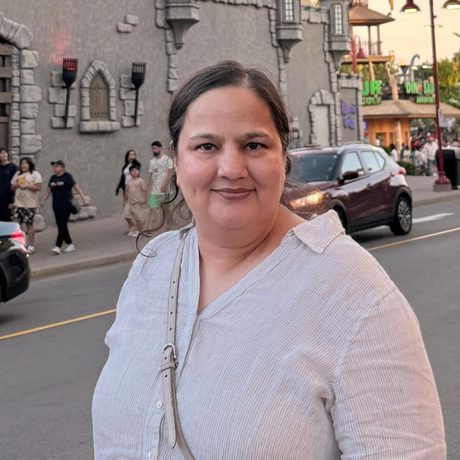
A private investor and community builder, and a mother of three adult children. She studied Global Studies at UNC Chapel Hill.
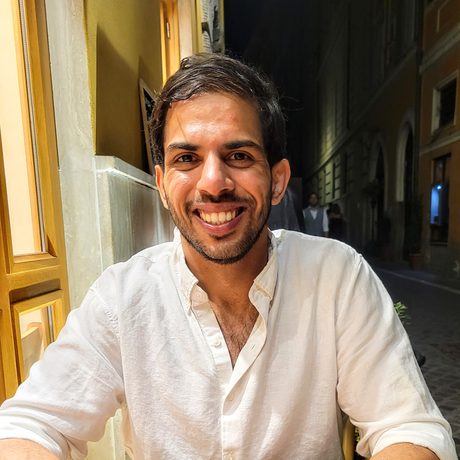
Heads business intelligence and advanced analytics for Lenovo's Infrastructure Solutions Group. He has been doing relief and development work in Pakistan since the 2005 earthquake. He holds an MS in Business Analytics from Duke.
Thirty years across AT&T, Alcatel, Deloitte and Allscripts, plus four years with Pakistan's Higher Education Commission.
An entrepreneur and technologist who founded DOTCOM in 1992 and runs manufacturing operations in Pakistan.
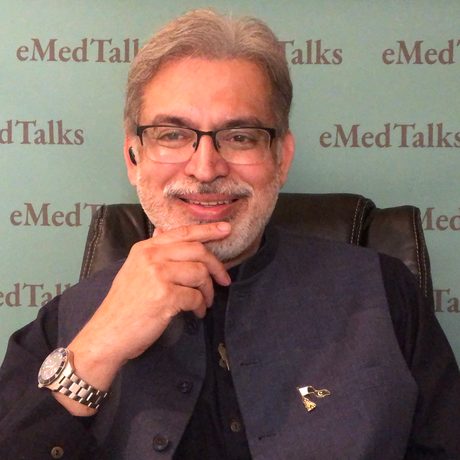
A Yale-trained nephrologist practising in the United States. He promotes peritoneal dialysis in Pakistan and runs the Street to School programme.
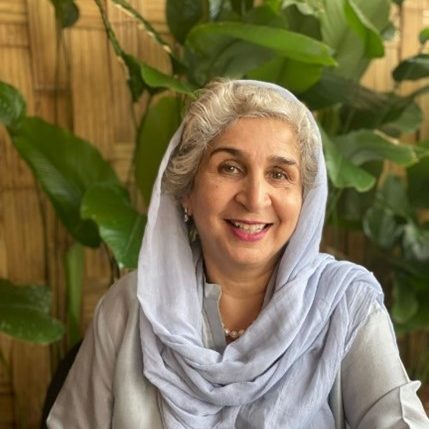
A corporate and community leader, a Muslim Chaplain with a master's from Hartford Seminary, who helped establish an orphanage in Islamabad.
A social entrepreneur with more than twenty years in business. She founded SHEWISE in 2015 and leads the Female Fusion initiative.
In 2025 we asked for volunteers and the community answered. Physicians took on the medical awareness sessions, people with communications experience took on outreach, and one volunteer became a village coordinator.
We do not list volunteers by name here. People come and go, a page that names them goes stale the moment they do, and the ones who give the most hours are rarely the ones who want a page. They are thanked by name in the annual report instead.
If you can find the time, we can find a role, and we will provide the training.
Every school, well and clinic we fund is delivered by an organization that already does that thing well.
Free quality education for out-of-school children in marginalised communities. Runs every school we fund. Accelerated primary in twelve months, elementary in eighteen.
Water filters and wells in rural communities. Brought us Bhujbar after installing filtration there, and has put three further projects to us for that village.
Write to us about adopting a village with your community, sponsoring a child, volunteering, or anything in the accounts you want explained.
Sponsor a child, fund a village by name, or give once. If your employer matches gifts, yours can go twice as far.
Classes run in a room the village already has, so nothing has to be built. That is why a year of teaching costs about one hundred dollars per child. Choose a village, or let us send your gift where it is needed most.
One time or monthly, and a monthly gift can be stopped by you at any time. Card, bank transfer, PayPal, Venmo and Apple Pay all work. At checkout you can name the village your gift is for, and say whether it is zakat.
Gifts from donors at these companies have already been matched. If yours is listed, or you are not sure, check with your employer before you give.
Every dollar you give reaches the work. We pay no platform fee and no processing fee on gifts made here. Khuddar Pakistan is zakat eligible: every project funds basic provisions, meaning education, clean water, and healthcare.
Our next fundraiser is A Night of Music. A Village Reborn., on Saturday 30 January 2027 at The Rumman Room in Raleigh. Tickets and details.
Yes. Khuddar Pakistan is a registered 501(c)(3) organization in the United States, EIN 92-1634951, tax-exempt since February 2023.
Yes. Our projects serve communities and individuals in need of basic provisions such as clean water, education, and healthcare.
Ten dollars a month is what a place in school costs, so that is the unit we use. We do not pair donors with named children, because that would mean sharing a child's details outside the programme. You get an update on the village your money went to instead.
Five years is long enough for a child to complete primary school and for the village to carry the work forward. We stay in contact and return if something breaks.
We survey candidates for children out of school, distance to a hospital, and water quality, then cost the work before approaching a community.
Yes, at any time, from the receipt email or by writing to KhuddarPak@gmail.com. There is no minimum term.